
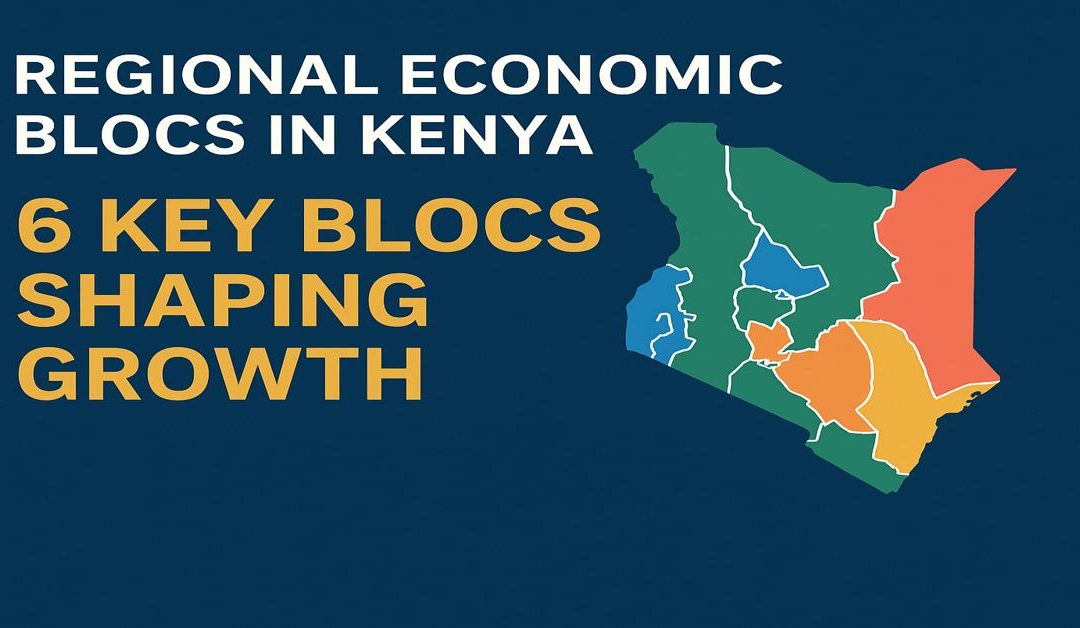
Regional Economic Blocs in Kenya: 6 Key Blocs Shaping Growth
Kenya’s push for integrated development has given rise to several regional economic blocs—powerful alliances that pool resources, coordinate development, and unlock shared opportunities. In this post, we explore the six major economic blocs in Kenya, their member counties, and the key sectors driving their growth. Whether you’re a policymaker, investor, or development-focused Kenyan, you’ll gain clarity on the structure and potential of each bloc.
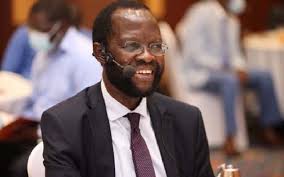
The Chairman of the Lake Region Economic Bloc (LREB) and Governor of Kisumu County, H.E Prof. Peter Anyang’Nyong’o
What Are Regional Economic Blocs in Kenya?
Regional economic blocs are formal collaborations among neighboring counties in Kenya. Their purpose? To align policies, coordinate infrastructure, and leverage shared comparative advantages across agriculture, tourism, trade, and more. By working together, these blocs drive sustainable growth and raise the standard of living in their regions.
Why Regional Economic Blocs Matter for Kenya
- Economies of Scale: Counties pool resources and budgets to fund large-scale projects.
- Policy Coordination: Blocs help synchronize development plans and governance strategies.
- Investment Attraction: A unified bloc is more attractive to investors than individual counties.
- Sustainable Growth: Shared environmental and social frameworks raise development standards.
Overview of Kenya’s 6 Regional Economic Blocs
1. Lake Region Economic Bloc (LREB)
The Lake Region Economic Bloc (LREB) was developed with support from Deloitte Africa and the Ford Foundation in partnership with 14 county governments. The goal is to mobilize resources and harmonize policies toward sustainable quality of life.
Member counties: Migori, Nyamira, Siaya, Vihiga, Bomet, Bungoma, Busia, Homa Bay, Kakamega, Kisii, Kisumu, Nandi, Trans Nzoia, Kericho.
Key economic activities: Agriculture (especially sugar, tea, and maize), fisheries (in the Lake Victoria region), cross-border trade, and manufacturing.
You can read more in our deep dive on the Lake Region Economic Bloc — What Counties Belong to LREB?
2. North Rift Economic Bloc (NOREB)
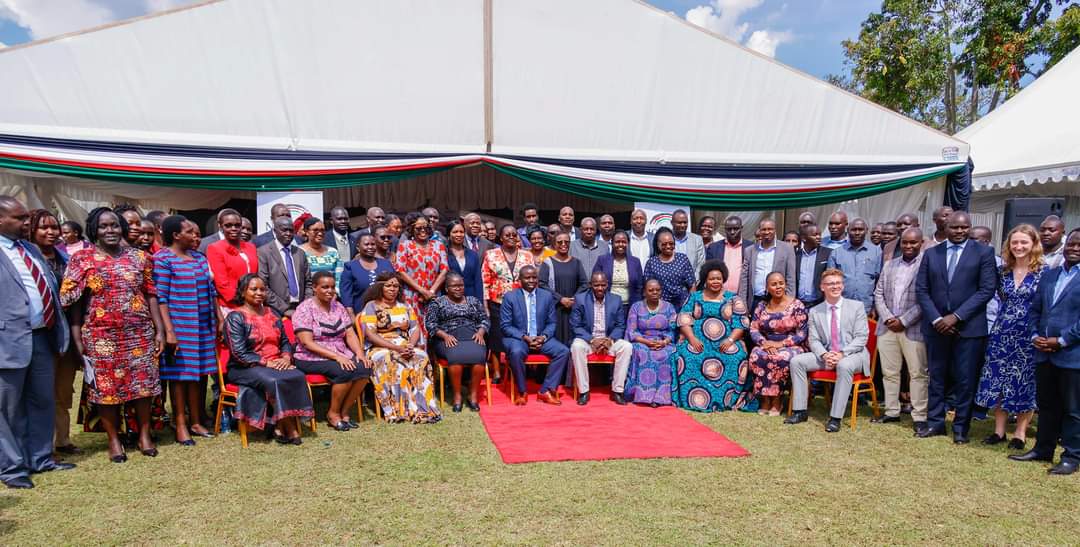
NOREB Gender Strategy (2024–2028) Launch
Photo credit: Uasin Gishu County Government
The North Rift Economic Bloc (NOREB) comprises eight counties in Kenya’s North Rift region. Its creation is rooted in the quest to consolidate the region’s strengths in agriculture, culture, and tourism.
Member counties: Uasin Gishu, Trans Nzoia, Nandi, Elgeyo Marakwet, West Pokot, Baringo, Samburu, Turkana.
Key economic activities: Commercial farming (wheat, maize, dairy), sports tourism, wildlife tourism, cross-county trade, and natural resource development.
3. Frontier Counties Development Council (FCDC)
Founded in 2014 (and registered in 2016), the Frontier Counties Development Council (FCDC) fosters cooperation, stability, and shared growth among Kenya’s frontier counties.
Member counties: Lamu, Tana River, Garissa, Wajir, Mandera, Marsabit, Isiolo, Turkana, Samburu, West Pokot.
Key economic activities: Pastoralism, cross-border trade, mineral exploration, tourism (coastal and arid landscapes), and infrastructure development.
4. Jumuia Ya Kaunti Za Pwani
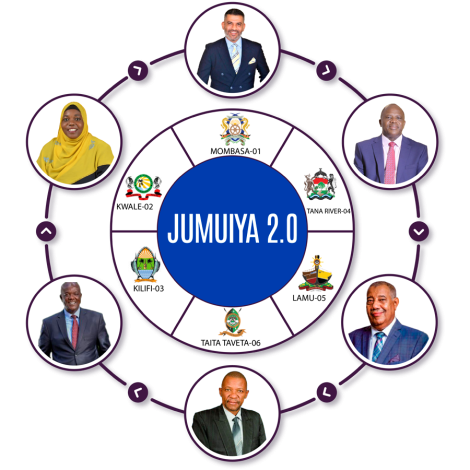
Jumuia Ya Kaunti Za Pwani File Photo
Photo credit: Jumuia Ya Kaunti Za Pwani — jumuiya.org
The Jumuia Ya Kaunti Za Pwani (Coastal Counties Union) groups counties along Kenya’s coastline to collaborate on maritime development, trade, and tourism.
Member counties: Taita Taveta, Tana River, Lamu, Kilifi, Kwale, Mombasa.
Key economic activities: Coastal tourism, port trade, fishing, marine conservation, and real estate development.
5. South Eastern Kenya Economic Bloc
The South Eastern Kenya Economic Bloc unites three counties in the southeast of Kenya. This bloc leverages its strategic location and agricultural potential to accelerate regional growth.
Member counties: Kitui, Machakos, Makueni.
Key economic activities: Horticulture, renewable energy (wind and solar), mining, and logistics.
6. Mt Kenya & Aberdares Region Economic Bloc
The Mt Kenya and Aberdares Region Economic Bloc brings together ten central Kenya counties around the Mt. Kenya and Aberdares highlands. This bloc is rich in natural resources, agriculture, and tourism.
Member counties: Nyeri, Nyandarua, Meru, Tharaka Nithi, Embu, Kirinyaga, Murang’a, Laikipia, Nakuru, Kiambu.
Key economic activities: Tea and coffee farming, tourism (mountain hiking, national parks), forestry, and agribusiness.
Comparing Kenya’s Regional Economic Blocs
| Economic Bloc | Number of Counties | Main Economic Activities |
|---|---|---|
| LREB | 14 | Agriculture, Fisheries, Trade |
| NOREB | 8 | Farming, Tourism, Trade |
| FCDC | 10 | Pastoralism, Minerals, Trade |
| Jumuia Ya Kaunti Za Pwani | 6 | Coastal Tourism, Fishing, Trade |
| South Eastern Bloc | 3 | Horticulture, Energy, Mining |
| Mt Kenya & Aberdares | 10 | Agriculture, Tourism, Forestry |
Leadership of Regional Economic Blocs
Each regional economic bloc has a steering committee, often chaired by a Governor from one of its member counties. As of 2025:
- LREB: Governor Prof. Peter Anyang’Nyong’o (Kisumu)
- NOREB: (At present, NOREB does not have a formal “president,” but its governance is jointly coordinated by member counties. The strategy documents are commonly hosted by Uasin Gishu County.)
- FCDC: (The frontier counties rotate leadership; currently led by member county governors via council structure.)
- Jumuia Ya Kaunti Za Pwani: (Leadership is collaborative, but key coordination happens from Mombasa County.)
- South Eastern Kenya Bloc: (Governance is shared among Machakos, Kitui, and Makueni.)
- Mt Kenya & Aberdares Region Bloc: (Leadership rotates among counties; Nyeri, Kiambu, and Nakuru often take a coordinating role.)
Are you passionate about regional development and want to be part of Kenya’s economic transformation?
Learn More About Our LifeBuild Program
Looking to do business, trade, or invest within these powerful economic blocs?
Visit Our Marketplace – Buy. Sell. Connect. Grow.
Conclusion
Regional economic blocs in Kenya—like LREB, NOREB, and FCDC—are not just geographic groupings. They are strategic engines for inclusive and sustainable growth. By coordinating on agriculture, tourism, trade, and infrastructure, these blocs unlock economies of scale and collective bargaining power. Whether you are an investor, a policymaker, or a committed Kenyan, understanding these blocs is key to engaging with Kenya’s future.
Explore our detailed LREB post and join our mission to grow together—with LifeBuild or our Marketplace ready to connect you across the country.
Frequently Asked Questions (FAQs)
What are the regional economic blocs in Kenya?
Kenya has six main regional economic blocs as of 2025: the Lake Region Economic Bloc (LREB), North Rift Economic Bloc (NOREB), Frontier Counties Development Council (FCDC), Jumuia Ya Kaunti Za Pwani (Coastal Counties Union), South Eastern Kenya Economic Bloc, and the Mt Kenya & Aberdares Region Economic Bloc.
Who leads each regional economic bloc?
As of 2025, LREB is chaired by Governor Prof. Peter Anyang’Nyong’o of Kisumu. The other blocs are coordinated via councils or rotating leadership among their member counties’ governors, such as in NOREB, FCDC, Jumuia Ya Kaunti Za Pwani, the South Eastern Bloc, and the Mt Kenya & Aberdares Bloc.
How do these blocs benefit economic growth?
These economic blocs help counties pool resources, align development policies, attract bigger investments, and jointly execute infrastructure and social programs—leading to more efficient and inclusive growth.
Can individuals or businesses interact with these blocs?
Yes. Investors, non-profits, and entrepreneurs can partner with bloc secretariats, county governments, or through platforms such as our Marketplace to engage in trade, development, or service provision across bloc member counties.
Explore Verified Products, Local Experts, Services, Events & Forums
Browse verified vendors, professional services and marketplace categories — neatly organised for fast discovery.

Ewefu Voices is the storytelling and insights team behind Ewefu Hub — sharing real stories, practical guides, and local wisdom that empower communities & farmers, build skills, and grow livelihoods across Western Kenya.

Comments